
Google SEO for Therapists Built Around the Searches That Lead to Care
Patients searching Google are often looking for something specific—a therapist nearby, support for a particular concern, a treatment approach, or a provider whose expertise matches their needs. Your practice should be easy to discover during those important searches. Our Google SEO for Therapists strategy improves how Google understands and surfaces your practice by strengthening service relevance, local signals, website structure, therapist expertise, and helpful content. We create an organic search presence that connects your practice with the patient searches most closely aligned with the care you offer.
See How Your Therapy Practice Appears on Google
We evaluate your current organic rankings, indexed pages, local presence, technical setup, and search competitors to uncover what may be preventing your practice from gaining stronger Google visibility.
Connect Your Services With Relevant Google Searches
We align therapy specialties, treatment approaches, locations, and provider expertise with the searches that closely reflect what prospective patients are looking for when they use Google.
Improve the Signals Google Uses to Understand Your Practice
We strengthen page structure, content relevance, internal links, local signals, technical elements, and site authority to give Google clearer information about your practice and the care you provide.
15–30 minutes. Focused Google search insights. No obligation.
Trusted to Grow Practices People Actually Find










What Keeps Therapy Practices From Gaining More Visibility on Google
Google evaluates many signals before deciding which therapy practices and pages to show for a search. When your website lacks clear service relevance, local signals, technical accessibility, or authority, competing practices and directories can take the positions your practice wants to reach.

Google May Not Clearly Understand Your Therapy Services
If several specialties are briefly mentioned on one general page, Google receives limited context about what each service actually covers. Dedicated, well-structured pages can establish stronger relevance for the individual types of therapy your practice offers.

Your Search Snippets May Not Earn Enough Attention
Ranking is only part of Google visibility. Unclear page titles and descriptions can make a relevant result less compelling to prospective patients, especially when competing listings communicate their specialty, location, or service more clearly.

Google May See Stronger Local Signals From Competitors
Local rankings can be influenced by how clearly your website and Google Business Profile communicate where your practice operates. Incomplete location information, weak local pages, and inconsistent practice details can make competitors more prominent for nearby searches.

Indexing and Technical Issues Can Hide Valuable Pages
A useful therapy page cannot perform well if Google has difficulty crawling, indexing, or interpreting it. Canonical errors, poor internal linking, duplicate content, slow performance, and other technical problems can restrict the organic potential of important pages.
Turning Your Therapy Website Into a Stronger Google Search Presence
We improve the signals Google uses to crawl, interpret, rank, and display your website. The strategy brings together technical improvements, search intent, local optimization, content development, and performance data rather than relying on a single ranking tactic.
Inspect What Google Can See
We examine indexing, crawlability, rankings, Search Console reports, metadata, site architecture, and technical errors to identify obstacles between your website and stronger organic search performance.
Match Pages With Google Search Intent
We connect individual pages with the therapy services, specialties, locations, and questions they should represent so Google has a clearer reason to surface them for relevant patient searches.
Coordinate Website and Google Maps Signals
We align your website's location information with your Google Business Profile and local content, creating a more consistent digital footprint for searches with geographic intent.
Develop Deeper Topical Relevance
Service pages, supporting articles, FAQs, therapist profiles, and internal links are organized around related areas of care, giving Google more context about your practice's specialties and expertise.
Improve Technical Signals Across the Site
We address elements such as page speed, mobile usability, structured data, canonicals, internal links, metadata, and indexation so technical weaknesses do not unnecessarily restrict important therapy pages.
Use Google Data to Guide Ongoing Improvements
Our Google SEO for Therapists approach uses Search Console queries, impressions, clicks, ranking changes, organic landing-page performance, and patient actions to determine where further optimization can have the most value.
How We Shape Therapy Content for Better Google Relevance
Google needs enough context to understand what a page covers, who it is useful for, and how it relates to the rest of your website. We build and optimize therapy content with clear topical focus, patient-friendly information, and supporting SEO signals that make each page easier for Google to interpret.
Find Gaps in Your Google Search Coverage
We review current rankings, Search Console queries, competing results, and existing pages to discover therapy services, specialties, locations, and patient questions that your website does not yet cover effectively.
→Give Every Page a Distinct Search Purpose
We define the primary intent of each service, location, therapist, and educational page so Google receives clearer signals about which URL should appear for a particular type of patient search.
→Optimize the Signals Surrounding the Content
We refine titles, headings, supporting topics, internal links, structured data, and related page connections so valuable content is supported by an SEO framework rather than published in isolation.
Five Stages to Build a Stronger Presence Across Google Search
Find What Is Holding Back Your Visibility
We examine indexed pages, organic positions, Search Console reports, technical errors, local visibility, competitors, and site authority to establish where your practice currently stands in Google.
Identify Where Your Practice Can Gain Ground
We uncover searches where your existing pages can improve, services that need stronger coverage, local opportunities, and content gaps that could expand the number of relevant queries your practice can reach.
Make Important Pages Easier for Google to Process
We address crawl paths, indexing signals, metadata, internal links, schema, page experience, and site organization so Google can more efficiently discover and interpret priority pages.
Strengthen the Connection Between Searches and Services
We enhance service content, therapist pages, location signals, supporting resources, and topical relationships to provide deeper context around the therapy care your practice offers.
Let Google Search Data Shape the Next Improvements
Our Google SEO for Therapists strategy uses impressions, clicks, query trends, landing-page performance, ranking movement, and patient actions to identify what should be improved, expanded, or prioritized next.
Strengthen the Signals That Help Google Find and Rank Your Practice
Strong Google visibility comes from multiple parts of your online presence working together. We improve local signals, website authority, content relevance, search targeting, and performance tracking so Google has clearer information about your practice and the therapy services you provide.
Google Maps & Local Presence
We strengthen your Google Business Profile, practice information, service areas, categories, and website location signals to support visibility when prospective patients make geographically focused therapy searches.
Google Business Profile Agency →Google AI & Answer Visibility
We structure service details, FAQs, schema, therapist information, and concise answers so your website is easier to interpret across Google's evolving AI-powered and answer-based search experiences.
AEO & GEO Agency →Authority Signals for Google
We pursue relevant links, citations, and external mentions that reinforce your practice's online authority and support the credibility of important therapy service and location pages.
Link Building Agency →Google-Optimized Therapy Content
We create useful service pages, specialty resources, local content, FAQs, and supporting articles that give Google deeper context while providing prospective patients with relevant information about your practice.
Blog Writing Agency →Google Search Opportunity Research
Our Google SEO for Therapists strategy identifies relevant searches by specialty, service, location, treatment approach, and patient intent, then connects those opportunities with the pages best positioned to address them.
Keyword Strategy Agency →Google Search Console Insights
We use Search Console to evaluate queries, impressions, clicks, indexing, page performance, and ranking trends, helping us find pages that can be improved and new searches your practice may be positioned to capture.
Google Search Console Agency →What Compounding Therapy SEO Looks Like
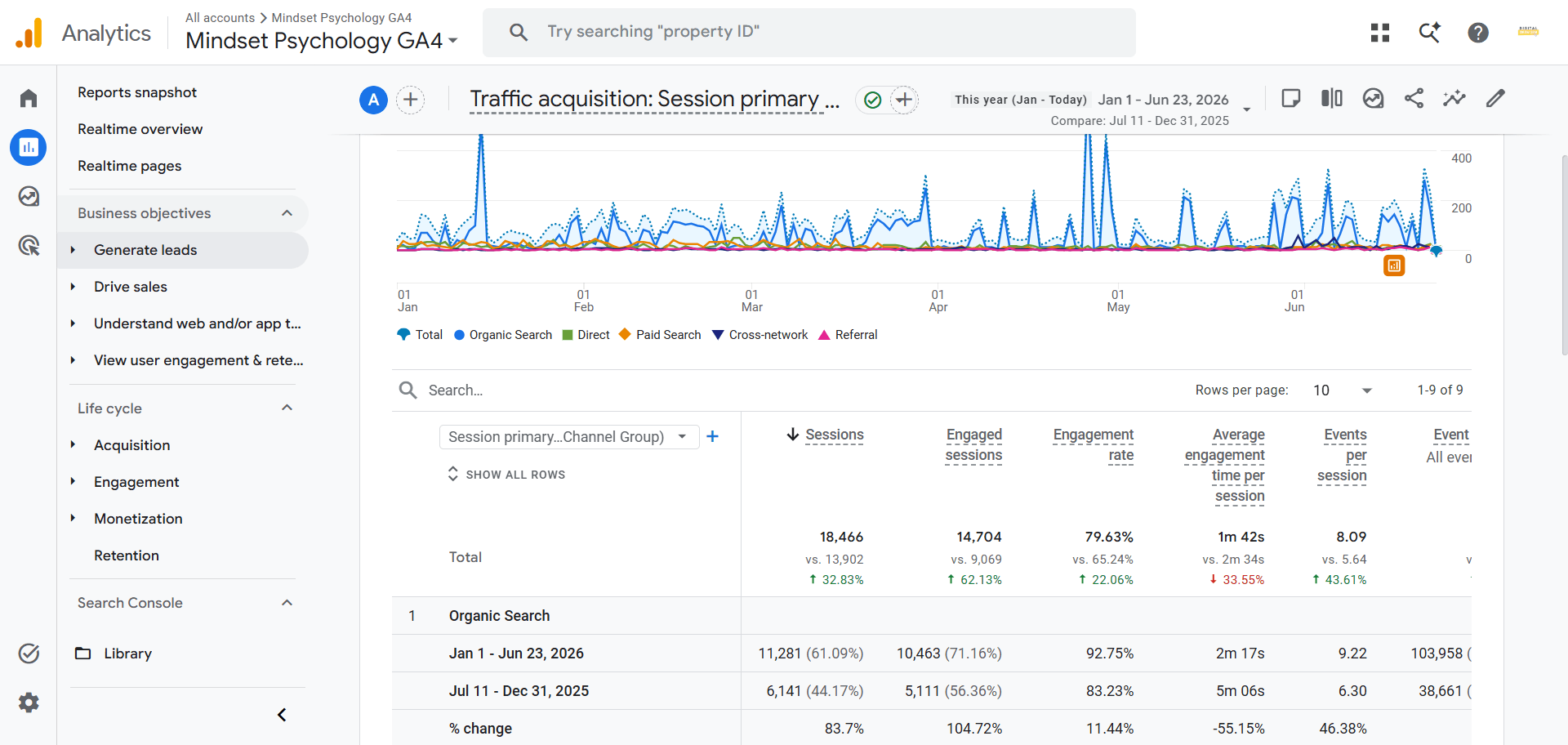
Organic Clicks, Six-month Trend
A Search Console-style line of organic clicks climbing over six months. SEO compounds — small early technical wins, then exponential lift as specialty and location pages stack up.
Top-3 Rankings Snapshot
Top-3 placement for a high-intent specialty query. About 75% of clicks go to the top three results.

Real Results for Therapy and Healthcare Clients
Every engagement is different — here's what compounding SEO and targeted SEM have produced for practices like yours.
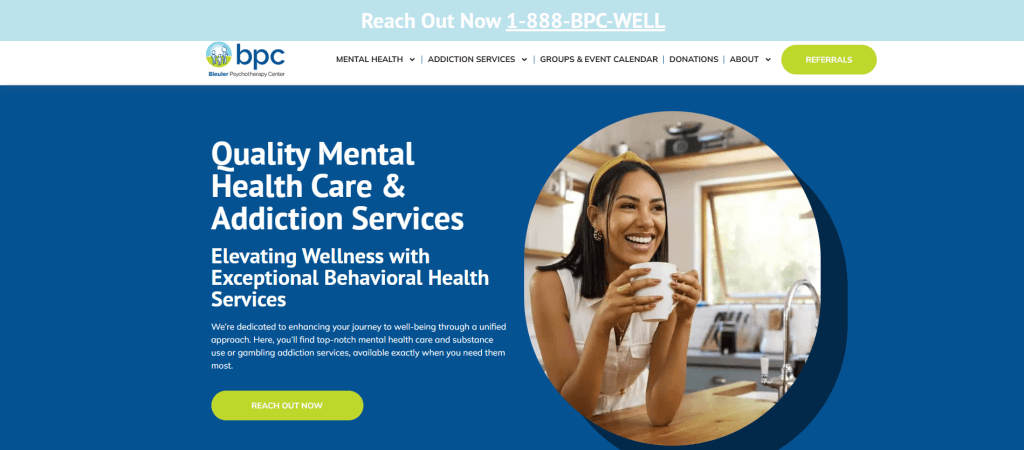
Bleuler Psychotherapy Center

Humantold

Mindset Psychology
What Practice Owners and Clients Say
From solo therapists to multi-site groups — here's what working with Digital Drew SEM looks like from the other side.

We've worked with Drew and Georgia for a couple of years and have been very happy with the results. They are fast to respond and always keep us updated on the progress of our ads or suggested changes they think we should make to increase performance success rates.

Amazing experience. Highly Recommend!!

We've been working with DigitalDrew for our Google Ads, Meta Ads, and SEO for a while now, and the results speak for themselves. The team is proactive, detail-oriented, and always ahead of platform changes. They've caught issues before they became problems and are quick to adjust strategy when something isn't working. Reporting is clear and easy to understand, and they take the time to actually walk us through performance versus just sending numbers. It genuinely feels like a partnership, not just a vendor relationship. Highly recommend them for any practice looking to grow through paid ads and SEO.

Thanks to Digital Drew SEM's efforts, the client has seen improved search rankings, increased website traffic, and more high-quality leads. The team is organized, responsive, and collaborative. They deliver work on time and are flexible in adapting to the client's changing needs.
Digital Drew SEM vs the Alternatives
| What You Get | ⭐ Digital Drew SEM | Generic SEO Agency | Directories (PT / BetterHelp) |
|---|---|---|---|
| Understands Therapy Search Intent | ✓ Yes | ⚠ Rarely | — N/A |
| Local + Condition SEO Together | ✓ Yes | One or Neither | ✕ No |
| Dedicated Senior Team | ✓ Yes | Junior Account Manager | ✕ No |
| Technical + Content Under One Roof | ✓ Yes | Often Split | ✕ No |
| Reports Your Front Desk Can Read | ✓ Yes | PDF Data Dump | ✕ No |
| You Own The Asset & Rankings | ✓ Yes | Usually | ✕ You Rent It |
Straight Talk on What it Costs
We scope SEO to your practice on the audit call — a solo practice and a multi-clinician group don't need the same number of pages or the same depth of technical work. Transparent monthly retainer, no inflated promises.
Solo Practice
A leaner scope focused on your core specialty and local pages — built to compound without overcomplicating things.
Multi-clinician Group
Broader scope covering multiple specialties, locations, and clinician bios — with deeper technical and content work.

Why I Take this Niche Seriously
I built Digital Drew SEM after years running marketing for Fortune 500 companies and leading agencies, on one premise: you deserve a team accountable to revenue — not one hiding behind jargon and vanity metrics.
I've watched good clinicians pour money into agencies that ran generic SEO, ignored how people actually search for help, and reported on traffic while the calendar stayed empty. That's the gap we close. I'm personally in these accounts. If we're not the right fit, I'll tell you on the call.
Strengthen Your Presence Across Google's Evolving Search Experience
Google search now includes traditional organic results, local listings, AI Overviews, featured answers, and other discovery surfaces. Therapy practices need clear service pages, strong local relevance, structured information, and useful content so Google can understand when their website should appear.
Our Google SEO for Therapists approach strengthens the signals Google uses to interpret your practice, including service relevance, therapist expertise, local information, site structure, schema, internal linking, and patient-focused content.
We build around the full Google ecosystem rather than a single ranking position, helping your practice improve visibility across organic search, local results, and newer AI-driven search experiences.
Book My Free Google SEO Audit →Give Google Clearer Service Signals
We organize service pages, therapist profiles, schema, headings, and internal links so Google can more easily understand your specialties and how different parts of your website relate.
Build Content Around Google Search Behavior
We create pages and supporting content around the questions, specialties, locations, and treatment searches prospective patients actually use when researching therapy.
Reinforce Local and Practice Credibility
Consistent practice information, Google Business Profile signals, provider details, citations, backlinks, and useful content help support the authority surrounding your website.
Use Google Data to Find the Next Opportunity
Search Console queries, impressions, clicks, landing-page performance, local visibility, and patient actions help reveal where your practice can improve or expand its Google presence.
What Therapy Practices Should Know About Ranking on Google
It can include technical SEO, service-page optimization, local search improvements, Google Business Profile alignment, internal linking, content development, structured data, authority building, and Search Console analysis. The exact strategy should reflect your specialties, locations, competition, and current visibility.
Timelines vary based on your current site, competition, website authority, technical condition, and target searches. Some indexing or on-page improvements may show movement earlier, while competitive therapy and local searches generally require sustained optimization over time.
Yes. For practices serving defined geographic areas, Google Business Profile can be an important part of local visibility. Accurate practice information, relevant categories, services, location signals, and a strong website connection can support local search performance.
Yes. Dedicated pages for distinct therapy services can give Google clearer context about what your practice offers while giving prospective patients information that more closely matches the service they searched for.
Clear service information, structured data, useful answers, strong site organization, and credible authority signals can make your content easier for Google's systems to interpret. These same improvements also support traditional organic visibility.
We evaluate Search Console impressions and clicks, ranking movement, organic landing-page performance, local visibility, calls, forms, consultation requests, and other meaningful patient actions to understand whether Google visibility is contributing to practice growth.
Turn Patient Searches Into a Smarter Keyword Strategy
Book a free keyword audit and we'll review how your therapy practice is currently targeting search demand, where keyword gaps exist, and which opportunities could strengthen your organic strategy.