
Google Ads for Therapists — Fill Your Caseload with the Right Patients
Connect with people actively searching for therapy services when they are ready to explore professional support. Our Google Ads for Therapists strategy combines high-intent keyword targeting, location-based campaigns, thoughtful ad messaging, conversion-focused landing pages, and ongoing optimization to generate relevant inquiries while reducing wasted ad spend.
Free Google Ads audit
we screen-share your Google Ads account and show you exactly where the budget is leaking. No prep, no pitch.
An honest read
wasted spend, weak targeting, tracking gaps, and what we'd fix or rebuild first.
You decide
we're selective about who we take on, and we want you to be just as sure about us.
15–30 minutes. No commitment. No pitch.
Trusted to Grow Practices People Actually Find












Why Google Ads for Therapists Can Waste Budget Without the Right Strategy

Broad Search Terms Attract the Wrong Clicks
Therapy-related keywords can trigger searches from students, job seekers, researchers, other clinicians, and people looking for services you do not provide. Tight match types, negative keywords, and regular search-term reviews help keep spend focused on more relevant prospects.

Sensitive Ad Policies Require Careful Messaging
Mental health advertising can involve stricter platform rules around personal attributes, sensitive topics, and targeting. Campaigns need thoughtful copy, compliant audience settings, and careful review so ads can run without unnecessary policy issues.

Generic Landing Pages Lose Ready-to-Book Visitors
Someone searching for therapy may want clear information about services, approach, availability, insurance, telehealth, location, and how to schedule. Sending paid traffic to a broad homepage can create friction and reduce the chance of an inquiry.

Clicks Do Not Equal New Clients
A campaign can look busy while producing very few meaningful inquiries. Our therapist Google Ads approach focuses on calls, forms, consultation requests, and booked appointments so optimization decisions are based on real client acquisition activity.
Build Campaigns Around Qualified Therapy Inquiries
We connect search intent, compliant ad messaging, conversion tracking, landing pages, and ongoing optimization so your advertising focuses on attracting people who are actively looking for therapy services.
Start With a Complete Account Review
We examine campaign structure, search terms, keyword match types, location settings, conversion tracking, ad copy, and landing pages to identify where budget and opportunities may be getting lost.
Separate Campaigns by Therapy Service
We organize ad groups around the services your practice actually provides, such as couples therapy, anxiety treatment, trauma therapy, OCD support, EMDR, or other specialties, so keywords, ads, and landing pages stay closely aligned.
Track the Actions That Matter
Instead of judging success by clicks alone, we configure meaningful conversion actions such as calls, consultation requests, appointment bookings, and form submissions so optimization decisions are connected to client acquisition.
Use Automation With Strategic Oversight
Automated bidding can help campaigns respond to performance signals, but we continue reviewing search terms, budgets, keyword quality, audience settings, and conversion data to keep automation aligned with your practice goals.
Build With Sensitive Advertising Rules in Mind
Therapy advertising requires careful messaging and targeting. We structure campaigns and landing experiences around platform policies while keeping the content clear, respectful, and focused on the services your practice offers.
Measure More Than Traffic
Our Google Ads for Therapists strategy evaluates cost per lead, booked consultations, inquiry quality, conversion rates, and campaign efficiency so reporting reflects outcomes that matter to your practice.
Five Stages From Account Review to Better Client Acquisition
Review the Existing Ad Account
We assess campaign structure, keyword targeting, search terms, conversion setup, location settings, ad messaging, landing pages, and historical performance to identify the most important issues first.
Map Campaigns to Therapy Services
We organize priorities around your specialties, service areas, booking goals, search demand, and available budget so each campaign has a clear purpose and target audience.
Set Up Tracking, Ads, and Landing Paths
We configure conversion actions, build focused ad groups, develop compliant messaging, refine keyword targeting, and align each campaign with a relevant landing page or booking path.
Collect Real Search and Conversion Data
Once campaigns go live, we monitor early search terms, clicks, conversion behavior, lead quality, and budget usage to quickly identify obvious waste and promising opportunities.
Refine Around Qualified Therapy Inquiries
We continuously review cost per lead, booked consultations, keyword performance, search terms, ad messaging, and conversion trends to improve efficiency and direct more budget toward stronger-performing campaigns.
Campaign Types We Manage for Different Growth Goals
Different businesses need different paid search strategies. We manage specialized Google Ads campaign types based on your products, services, audience, conversion model, and performance goals.
Google Shopping Campaigns
We organize product feeds, campaign structure, product groups, bidding, and performance data to help ecommerce businesses reach shoppers searching with clear purchase intent.
Google Shopping Ads Agency →Performance Max Management
We structure asset groups, audience signals, exclusions, conversion goals, and supporting data so Performance Max campaigns work alongside your broader account strategy instead of operating without direction.
Performance Max Agency →Conversion Tracking & GA4
We configure and verify calls, forms, purchases, bookings, and other meaningful actions across Google Ads and GA4 so campaign optimization is based on real conversion data.
Conversion Tracking & GA4 Agency →What a Dialed-In Therapy Ad Account Looks Like
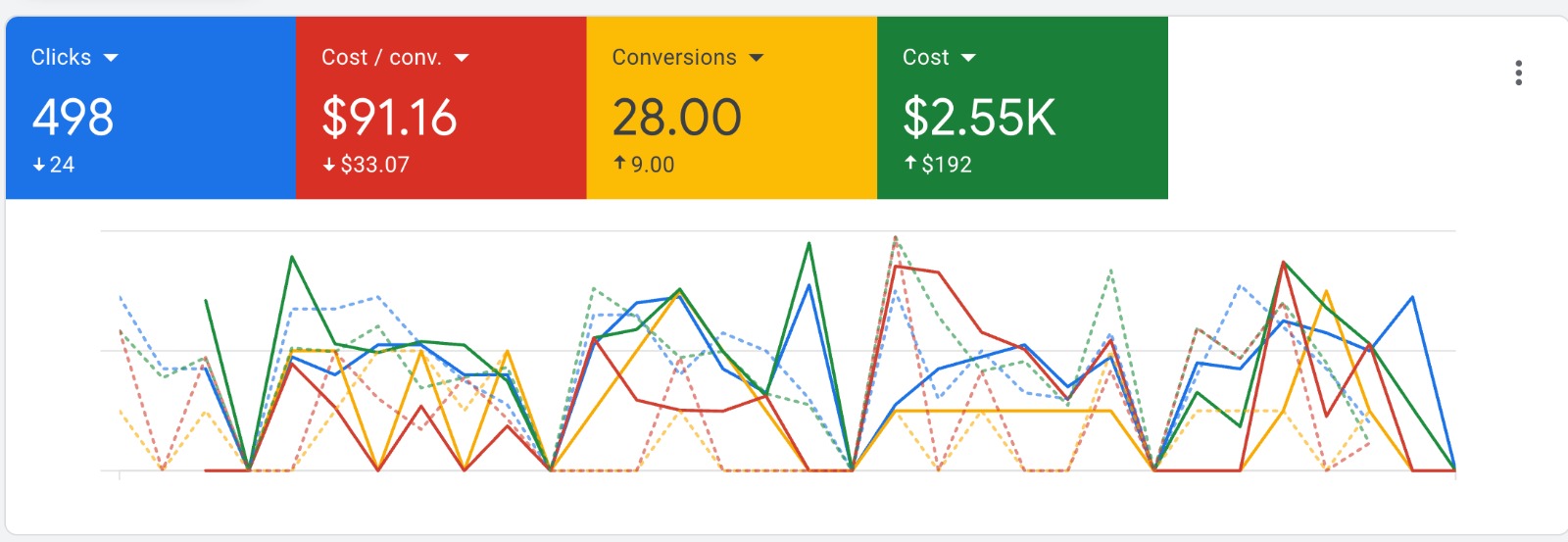
Cost-per-booked-consult, first 90 days
A line trending down as waste is cut and the account learns. The early job is eliminating spend that doesn't convert — then scaling what does.
Booking-intent search ad snapshot
High-intent targeting beats broad reach. A specific query like "[specialty] therapist [city]" reaches someone ready to book — not browse.
Real Results for Therapy and Healthcare Clients
Every engagement is different — here's what targeted Google Ads have produced for practices like yours.

Mindset Psychology
Bleuler Psychotherapy Center

Humantold
What Practice Owners Say About Working With Us

We've worked with Drew and Georgia for a couple of years and have been very happy with the results. They are fast to respond and always keep us updated on the progress of our ads or suggested changes they think we should make to increase performance success rates.

Amazing experience. Highly Recommend!!

We've been working with DigitalDrew for our Google Ads, Meta Ads, and SEO for a while now, and the results speak for themselves. The team is proactive, detail-oriented, and always ahead of platform changes. They've caught issues before they became problems and are quick to adjust strategy when something isn't working. Reporting is clear and easy to understand, and they take the time to actually walk us through performance versus just sending numbers. It genuinely feels like a partnership, not just a vendor relationship. Highly recommend them for any practice looking to grow through paid ads and SEO.

Thanks to Digital Drew SEM's efforts, the client has seen improved search rankings, increased website traffic, and more high-quality leads. The team is organized, responsive, and collaborative. They deliver work on time and are flexible in adapting to the client's changing needs.
Digital Drew SEM vs the Alternatives
| What You Get | ⭐ Digital Drew SEM | Generic PPC Agency | DIY / In-House |
|---|---|---|---|
| Understands Therapy Booking Intent | ✓ Yes | ⚠ Rarely | — N/A |
| Sensitive-Category Ad Compliant | ✓ Yes | ⚠ Sometimes | ✕ No |
| Builds Converting Landing Pages | ✓ Yes | ⚠ Rarely | ✕ No |
| Conversion Tracking Done Right | ✓ Yes | Often Broken | ✕ No |
| Dedicated Senior Paid Team | ✓ Yes | Junior Account Manager | You |
| Measures Cost Per Booked Client | ✓ Yes | Clicks / Impressions | ✕ Guesswork |
Straight Talk on What it Costs
Two parts, kept separate and transparent: a monthly management retainer scoped to your account, and your ad spend — which goes directly to Google and is never marked up.
Management retainer
Scoped to the size and complexity of your account. Confirmed on your audit call — a solo practice and a multi-clinician group don't need the same depth of work.
Ad spend
Goes directly to Google, never marked up. We'll recommend a realistic starting budget for your market so you're not underspending into noise.

Why I Take this Niche Seriously
I built Digital Drew SEM after years running marketing for Fortune 500 companies and leading agencies, on one premise: you deserve a team accountable to revenue — not one hiding behind jargon and vanity metrics.
I've watched good clinicians pour money into agencies that ran broad campaigns, ignored conversion tracking, and reported on clicks while the calendar stayed empty. That's the gap we close. I'm personally in these accounts, watching cost per booked client. If we're not the right fit, I'll tell you on the call.
Support Your Paid Campaigns With Broader Search Visibility
People looking for a therapist may interact with several search experiences before contacting a practice. They can see paid ads, organic results, local listings, AI-generated answers, directories, and educational content while researching their options.
We connect Google Ads for Therapists with clear service content, structured data, local search signals, and answer-focused information so your practice can build visibility beyond the paid results alone.
Paid search can capture immediate demand, while a stronger organic and AI-ready presence gives prospective clients more opportunities to discover and understand your practice.
Book My Free Google Ads Audit →Clarify Your Therapy Services
We organize service information, structured data, practice details, and landing-page content so search platforms can better understand what your practice offers.
Answer Prospective Client Questions
Clear FAQs and educational content can address common questions about therapy services, appointments, treatment approaches, insurance, telehealth, and what clients can expect.
Build a Consistent Practice Presence
Accurate practice information, relevant professional details, local listings, and consistent service messaging help reinforce credibility across different search experiences.
Connect Search Data With Ad Strategy
Search queries, landing-page behavior, conversion data, and emerging discovery patterns can reveal new opportunities for improving both paid campaigns and supporting content.
What Therapy Practices Should Know Before Running Google Ads
Keyword selection should reflect the services your practice actually provides and the intent behind each search. We typically organize targeting around therapy specialties, service areas, treatment-related searches, and consultation intent while using negative keywords to reduce irrelevant traffic.
Therapists can use Google Ads, but mental health advertising requires careful attention to Google's advertising and personalized advertising policies. Campaign structure, targeting, and messaging should be reviewed with these requirements in mind.
There is no universal budget because costs vary by location, therapy specialty, competition, search demand, and campaign goals. We use keyword and market data to establish a practical starting budget and adjust spending as meaningful performance data becomes available.
Usually, a page closely matched to the person's search provides a clearer experience than a general homepage. A focused landing page can explain the relevant therapy service, introduce the practice, answer important questions, and provide an obvious path to request an appointment or consultation.
We look beyond impressions and clicks by tracking meaningful actions such as qualified phone calls, appointment requests, consultation forms, and online bookings. We also review conversion rates, cost per lead, search-term quality, and budget efficiency to guide campaign decisions.
Yes. When appropriate, campaigns can be organized around specific services such as couples therapy, anxiety therapy, trauma therapy, EMDR, OCD treatment, or other specialties offered by the practice. This creates stronger alignment between the search, ad message, and landing page.
Stop Guessing with Your Ad Budget
Book your free ad-account audit. We'll screen-share your Google Ads and Meta accounts, show you where the budget is leaking, and tell you honestly whether we can help.