
Google Ads for Psychotherapy & Psychiatry Practices Seeking More Patients
Reach people actively searching for psychotherapy, psychiatric evaluations, medication management, and other mental health services your practice provides. Our Google Ads for Psychotherapy & Psychiatry strategy aligns patient search intent with relevant services, carefully written ads, location targeting, focused landing pages, and conversion tracking to help generate qualified appointment inquiries.
Review Where Your Mental Health Ad Budget Is Going
We examine your existing campaigns, search terms, location targeting, service segmentation, landing pages, and conversion tracking to identify where spend may be reaching people outside the patient searches most relevant to your practice.
Separate Psychotherapy and Psychiatry Search Intent
We organize campaigns around the services you actually provide, such as psychotherapy, psychiatric evaluations, medication management, and related care, so each ad group speaks to a clearer patient need.
Create a Clear Path From Search to Appointment
We connect relevant ads with focused service pages and straightforward booking options, then use calls, forms, appointment requests, and search-term data to continually improve campaign performance.
15–30 minutes. Practical campaign insights. No obligation.
Trusted to Grow Psychotherapy & Psychiatry Practices with Google Ads That Reach More Patients












Where Paid Search Can Lose Psychotherapy & Psychiatry Patients
People searching for psychotherapy and psychiatric care often have different needs and use different search language. Without clear campaign separation, precise targeting, and relevant landing pages, your advertising budget can be spent on searches that do not match the services your practice provides.

Therapy and Psychiatry Searches Can Overlap
Searches for therapists, psychiatrists, medication services, evaluations, and general mental health information can trigger overlapping ads. Careful keyword segmentation helps direct budget toward searches that more closely match your actual services.

One Campaign Cannot Represent Every Care Option
A person searching for psychotherapy may be looking for something very different from a patient seeking a psychiatric evaluation or medication management. Separate campaign paths allow the messaging and destination page to reflect the specific service being searched.

Patients Need Clear Information Before Reaching Out
Provider credentials, services offered, appointment formats, insurance information, telehealth availability, and scheduling options can all influence the next step. Focused landing pages make this information easier to find after an ad click.

Ad Engagement Is Not the Same as Patient Interest
Clicks and impressions provide only part of the picture. Tracking calls, appointment forms, booking actions, and other meaningful conversions helps show which campaigns are producing stronger patient engagement.
Connecting Different Care Needs With the Right Campaign
We build distinct paid search journeys around psychotherapy and psychiatric services, helping prospective patients reach information that reflects what they searched for and the type of care your practice provides.
Separate Search Intent by Care Type
We identify how search behavior differs across psychotherapy, psychiatric evaluations, medication management, and other relevant services so each campaign can target a more specific patient need.
Build Distinct Campaign Paths
Instead of combining every service into one broad campaign, we organize keywords, ads, budgets, and landing pages around the areas of care your practice wants to promote.
Write Ads That Reflect the Service
Ad messaging clearly communicates whether a searcher is being directed toward psychotherapy, psychiatry, medication-related care, or another available service while keeping the language respectful and easy to understand.
Send Patients to the Right Information
We align ads with relevant landing pages that explain the specific service, provider options, appointment process, and practical next steps instead of sending every visitor to the same general page.
Measure Appointment-Focused Actions
Calls, inquiry forms, appointment requests, and online booking actions are tracked so campaign decisions can reflect meaningful patient behavior rather than traffic volume alone.
Refine Campaigns Using Real Search Data
Our Google Ads for Psychotherapy & Psychiatry strategy uses search-term relevance, conversion activity, cost per inquiry, appointment actions, and budget performance to guide ongoing campaign improvements.
How We Build Paid Search Around Different Care Needs
Psychotherapy and psychiatry often serve different patient needs and search behaviors. We evaluate your services, provider availability, geographic reach, appointment capacity, search demand, and existing advertising data before deciding how each area of care should be promoted.
Separate Therapy and Psychiatry Search Demand
We research how prospective patients search for psychotherapy, psychiatric evaluations, medication management, and other services, then identify which terms most closely match the care available at your practice.
→Match Each Search With the Right Care Path
We connect service-focused keyword groups with relevant ads and landing pages so patients looking for therapy or psychiatric care receive information that reflects the specific service they searched for.
→Improve Campaigns From Patient Response
We use search queries, calls, forms, appointment requests, conversion costs, and inquiry patterns to identify which campaign elements deserve more investment and which should be adjusted.
Five Stages From Search Intent to Patient Inquiries
Understand Your Services and Advertising Goals
We review the psychotherapy and psychiatric services you provide, current campaigns, account structure, budgets, geographic coverage, landing pages, tracking setup, and appointment goals to establish a clear starting point.
Find Searches That Match Available Care
We identify relevant patient searches for therapy, psychiatry, evaluations, medication management, and other offered services while filtering informational, employment, educational, and unrelated queries.
Create Separate Paths for Different Services
We organize keywords and ads around distinct areas of care, establish negative keywords, refine geographic targeting, configure meaningful conversions, and connect each campaign with an appropriate landing page.
See Which Searches Lead to Patient Action
After campaigns begin collecting data, we review search terms, calls, forms, appointment activity, costs, and budget distribution to understand which areas are producing more relevant engagement.
Allocate Spend Based on Meaningful Results
Our Google Ads for Psychotherapy & Psychiatry strategy uses patient inquiry activity, search relevance, conversion costs, appointment actions, and campaign efficiency to continually refine targeting and budget allocation.
Campaign Types We Manage for Different Growth Goals
Different businesses need different paid search strategies. We manage specialized Google Ads campaign types based on your products, services, audience, conversion model, and performance goals.
Google Shopping Campaigns
We organize product feeds, campaign structure, product groups, bidding, and performance data to help ecommerce businesses reach shoppers searching with clear purchase intent.
Google Shopping Ads Agency →Performance Max Management
We structure asset groups, audience signals, exclusions, conversion goals, and supporting data so Performance Max campaigns work alongside your broader account strategy instead of operating without direction.
Performance Max Agency →Conversion Tracking & GA4
We configure and verify calls, forms, purchases, bookings, and other meaningful actions across Google Ads and GA4 so campaign optimization is based on real conversion data.
Conversion Tracking & GA4 Agency →What Compounding Growth Looks Like for a Practice
Consultation requests, 90-day trend
Inquiries climbing as condition-specific pages start ranking, Google Business Profile signals strengthen, and booking friction gets removed.
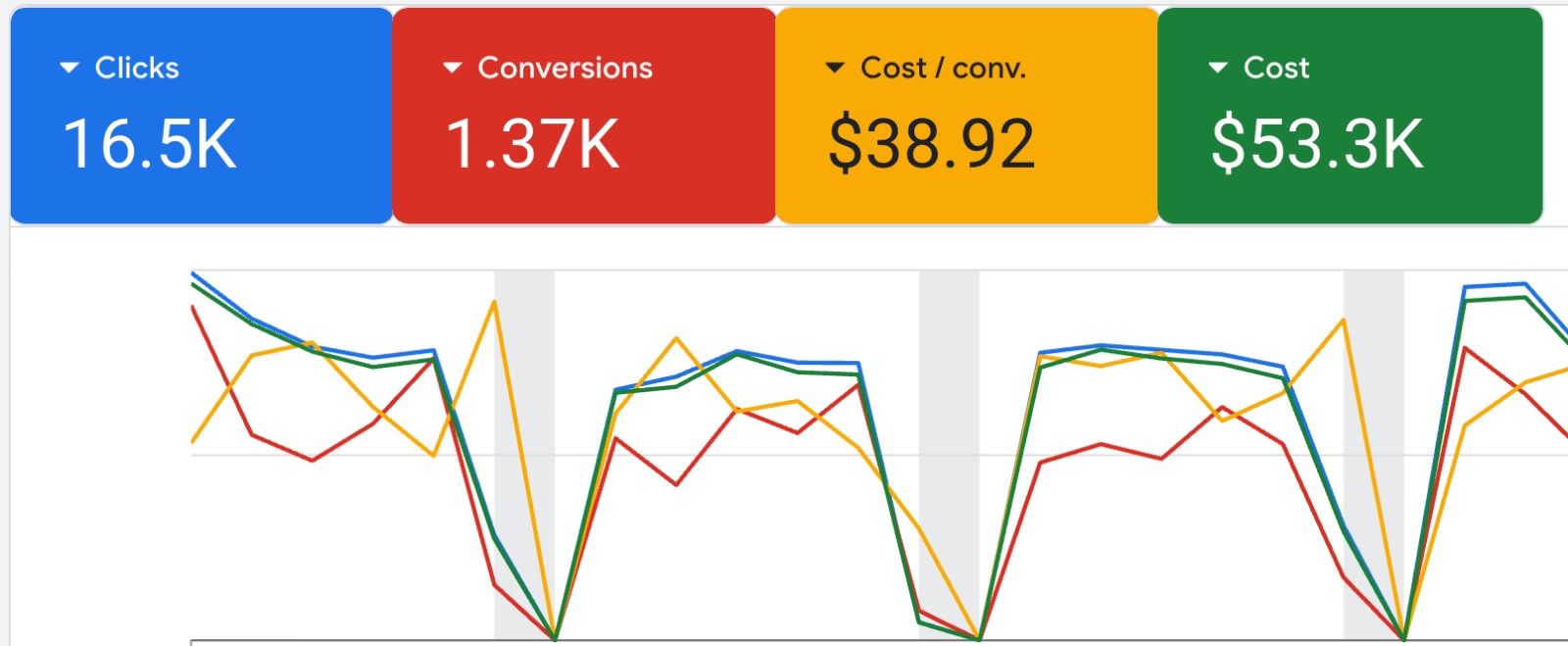
Before vs. after site and SEO restructure
A typical restructure replaces one generic services page with condition-specific pages and puts tracking behind every way a patient can reach you.
Real Results for Therapy Practices Like Yours
A relationship-focused practice doesn't market like a psychodynamic one, and a group practice with a dozen clinicians doesn't market like a solo practitioner. Here's what focused marketing has produced across practice types.

Mindset Psychology
Bleuler Psychotherapy Center

Humantold
What Practice Owners Say About Working With Us

We've worked with Drew and Georgia for a couple of years and have been very happy with the results. They are fast to respond and always keep us updated on the progress of our ads or suggested changes they think we should make to increase performance success rates.

Amazing experience. Highly Recommend!!

We've been working with DigitalDrew for our Google Ads, Meta Ads, and SEO for a while now, and the results speak for themselves. The team is proactive, detail-oriented, and always ahead of platform changes. They've caught issues before they became problems and are quick to adjust strategy when something isn't working. Reporting is clear and easy to understand, and they take the time to actually walk us through performance versus just sending numbers. It genuinely feels like a partnership, not just a vendor relationship. Highly recommend them for any practice looking to grow through paid ads and SEO.

Thanks to Digital Drew SEM's efforts, the client has seen improved search rankings, increased website traffic, and more high-quality leads. The team is organized, responsive, and collaborative. They deliver work on time and are flexible in adapting to the client's changing needs.
A More Focused Approach to Psychotherapy & Psychiatry Google Ads
| Campaign Focus | ⭐ Digital Drew SEM | General PPC Agency | In-House / DIY |
|---|---|---|---|
| Campaigns separated by therapy specialty | ✓ Built into strategy | ⚠ Depends on approach | ✕ Requires manual setup |
| Negative keyword and search-term management | ✓ Ongoing review | ⚠ Varies by agency | ✕ Time intensive |
| Patient-focused ad messaging | ✓ Therapy-specific | ⚠ May be more general | ✕ Requires ad expertise |
| Therapy service landing-page alignment | ✓ Campaign matched | ⚠ Depends on scope | ✕ Often handled separately |
| Meaningful conversion tracking | ✓ Calls, forms & bookings | ⚠ Tracking depth varies | ✕ Requires configuration |
| Optimization around patient inquiries | ✓ Core campaign focus | ⚠ May prioritize standard PPC metrics | ✕ Requires ongoing analysis |
| Visibility into campaign performance | ✓ Clear reporting | ⚠ Reporting varies | ✓ Direct account access |
Invest Your Ad Budget Around the Care Patients Seek
Psychotherapy and psychiatry practices can have very different advertising needs depending on their services, providers, locations, appointment capacity, and local search competition. Our Google Ads for Psychotherapy & Psychiatry strategy allocates budget around the areas of care you want to promote while accounting for patient search demand and campaign performance.
Independent Providers & Smaller Practices
We focus available budget on priority services such as psychotherapy, psychiatric evaluations, or medication management, using carefully selected keywords and geographic targeting to reach patients searching for the care you provide.
Group Practices & Multi-Provider Clinics
We distribute advertising across psychotherapy and psychiatry services, providers, specialties, and locations while adjusting investment according to search demand, appointment availability, conversion activity, and ongoing campaign data.

Why I Take Therapy Marketing Seriously
I built Digital Drew SEM after years running marketing for Fortune 500 companies and leading agency teams at IPG Mediabrands and Performics, and mental health is one of the categories where I've seen well-meaning marketing do the most harm when it's handled carelessly. Stock photos of someone staring out a rainy window. Copy that reads like a clinical intake form instead of something a person in distress would actually respond to.
That's not marketing, it's noise dressed up as outreach. The practices that grow are the ones whose websites sound like they understand what someone is going through before that person ever picks up the phone. I wrote about this kind of audience-first thinking in my book on AI and digital marketing, and it applies here more than almost anywhere else I've worked: get the language right, get the local visibility right, and make booking simple. Everything else follows from that.
I'm personally in these accounts. If we're not the right fit for your practice, I'll tell you on the call.
Connect Each Patient Search With the Right Type of Care
Someone looking for psychotherapy may have a very different goal from a patient searching for a psychiatrist, psychiatric evaluation, or medication management. Paid search works best when these needs are treated separately, allowing your practice to present the most relevant service at the right search moment.
Our Google Ads for Psychotherapy & Psychiatry strategy separates different types of patient intent and connects them with relevant ads, service pages, and appointment options rather than forcing every search through the same campaign journey.
We analyze the searches and patient actions behind each area of care, giving us better insight into which services are attracting relevant inquiries and where targeting, messaging, or budget allocation needs adjustment.
Book My Free Google Ads Audit →Separate Therapy From Psychiatry Intent
We distinguish searches for psychotherapy from those related to psychiatric care, evaluations, medication management, and other offered services so campaigns can respond to different patient needs.
Make the Available Care Clear
Ad messaging helps prospective patients understand which services your practice provides, where appointments are available, and what they can do next without relying on vague or overly broad language.
Continue the Journey After the Ad
A psychotherapy search can lead to psychotherapy information, while a psychiatry search can lead to details about psychiatric services, helping patients reach a more relevant destination after clicking.
Measure Performance by Service
We evaluate calls, forms, appointment requests, search terms, and conversion costs across different areas of care to see where advertising is producing meaningful patient activity.
Paid Search Questions From Mental Health Practices
Eligible psychotherapy and psychiatric services can be promoted through Google Ads, subject to applicable Google advertising policies and any location-specific requirements. Campaign targeting, messaging, landing pages, and conversion setup should be reviewed carefully for the services being advertised.
Separating them can make sense because patients often search for these services differently. Distinct campaigns can provide greater control over keywords, ad messaging, budgets, landing pages, and conversion data for each area of care.
Relevant terms depend on the services actually offered. Campaigns may focus on searches related to psychotherapy, psychiatrists, psychiatric evaluations, medication management, specific service areas, and geographic intent while using negative keywords to reduce unrelated traffic.
Campaigns may be able to promote eligible psychiatric and medication management services, but the exact setup depends on the service, ad content, destination page, location, and applicable Google policies. These campaigns should be reviewed carefully rather than assuming every medication-related ad is treated the same way.
A focused landing page should clearly explain the service being advertised, who provides the care, appointment options, relevant locations, telehealth availability when applicable, and how a prospective patient can request an appointment or contact the practice.
We review search-term reports, refine keyword match types, add negative keywords, separate services into focused campaign groups, and adjust geographic settings. This helps limit searches that do not closely match the psychotherapy or psychiatric services being promoted.
We track meaningful actions such as qualified calls, contact forms, appointment requests, and online booking activity. We also review search-term relevance, conversion costs, budget distribution, and performance by service to guide ongoing campaign decisions.
Stop Losing Patients Who Are Already Looking for Help
Book your free practice marketing audit. We'll review your SEO, local search visibility, and ad accounts together, show you the three biggest gaps, and give you an honest read on what it would take to fill your schedule.