
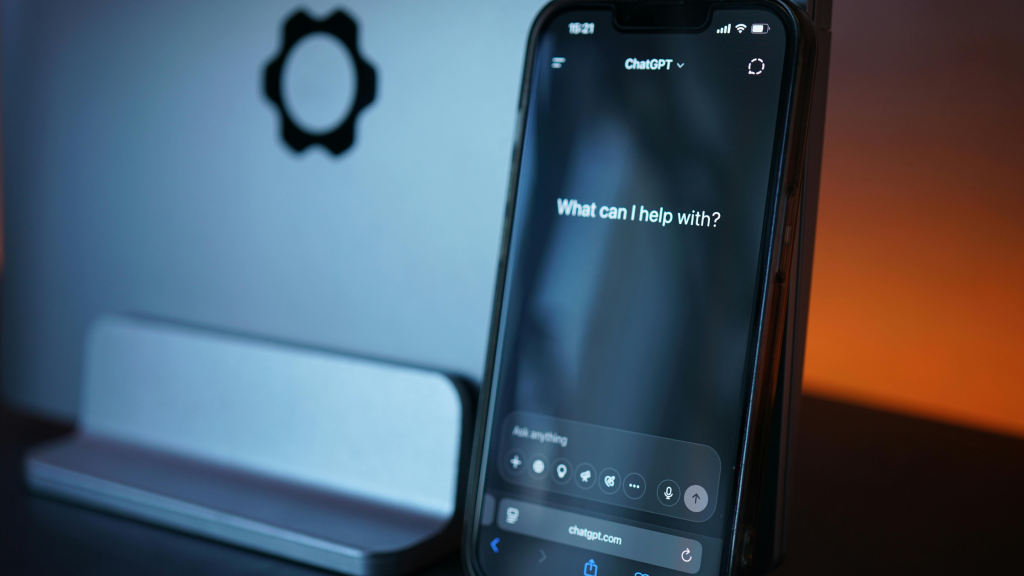
Picture your best customer. They’ve got a problem you solve. A year ago, they would have opened Google, typed a query, and scrolled through ten blue links until they found you. Today? There’s a decent chance they open ChatGPT instead, ask a question in plain English, read a tidy three-paragraph answer, and never see a search results page at all.
If your brand isn’t in that answer, you don’t exist for that buyer. No second page to climb to. No “just below the fold.” You’re either in the response or you’re invisible.
That shift is happening faster than most businesses realize, and it’s quietly rewriting the rules of being found online.
What GEO is, and why it’s not just SEO with a new hat
GEO stands for generative engine optimization. The short definition: it’s the practice of getting your brand cited, mentioned, and recommended inside AI-generated answers from tools like ChatGPT, Perplexity, Google’s AI Overviews, and Gemini.
People sometimes assume it’s just SEO rebranded. It isn’t, though they overlap. Classic SEO is about ranking a page in a list. GEO is about becoming part of an answer. With SEO, the engine points the user toward you. With GEO, the engine speaks on your behalf, deciding whether to include your brand in the sentence it generates. That’s a fundamentally different job.
Why care now instead of waiting? Because the audience is already enormous. ChatGPT reached 900 million weekly active users by February 2026, up from 400 million a year earlier. And these aren’t all people writing poems. According to OpenAI’s own usage research, around half of ChatGPT usage is people asking questions, researching, comparing, hunting for recommendations. That’s the exact behavior that used to happen in a search bar, and it’s the behavior that decides who gets the sale.
It gets more pointed. Gartner has predicted that traditional search engine volume will fall 25% by 2026 as people lean on AI assistants. A quarter of the search traffic you’ve optimized for, drifting toward a channel most brands have done nothing to prepare for. Read that twice.
The AI traffic is real, and it converts
Here’s the part that should grab anyone with a revenue target.
This isn’t vanity traffic. During the 2025 holiday season, Adobe found that AI-driven referral traffic to US retail sites surged 693% year over year. Nearly seven times. And those visitors weren’t tire-kickers; the same Adobe data showed AI referrals converted about 31% better than traffic from other sources. People who arrive via an AI recommendation tend to show up further down the funnel, already half-sold, because the AI did the comparison work for them.
So the buyers are there, they’re growing fast, and they convert well. The only question is whether your brand is in the answer when they ask.
How AI engines decide what to cite
Nobody outside these companies has the full recipe, and the systems change constantly. But the patterns are clear enough to act on, and they’re less mysterious than the GEO hype crowd wants you to believe.
AI engines tend to favor content that is clearly structured, easy to extract, and corroborated across multiple trustworthy sources. A few things consistently help:
Direct, quotable answers. Models love content that answers a question in one clean sentence up top, then explains. If your page buries the answer in paragraph nine, the model has to work to find it, and often won’t bother.
Entity consistency. The engines build a kind of map of who you are, what you do, and what you’re known for. If your business name, description, and category are consistent across your site, your Google Business Profile, your social accounts, and third-party listings, you become a clearer “entity” the model trusts. Sloppy, contradictory information makes you fuzzy and skippable.
Being mentioned elsewhere. This is the big one people underestimate. AI models lean heavily on what the broader web says about you, not just what you say about yourself. Getting cited in articles, roundups, directories, and reputable publications builds the third-party credibility these systems reward. In a sense, digital PR has become an AI-visibility tactic.
Structured data. Schema markup helps machines understand what your content actually is, a review, a product, an FAQ, a how-to. It won’t single-handedly get you cited, but it removes friction, and removing friction matters.
Freshness and clarity. Up-to-date content written in plain, well-organized language beats dense, dated walls of text. The models are summarizing for a human; give them something easy to summarize.
The 2026 AI-visibility checklist
Enough theory. Here’s what to actually do if you want to show up in ChatGPT and the rest.
- Lead with the answer. On every important page, state the core answer in the first sentence or two, then expand. Write the way a model wants to quote you. Question, then crisp answer, then detail.
- Build out FAQ-style content. Real questions your customers ask, answered plainly. This format maps almost perfectly to how people prompt AI tools, which makes your content easy to lift into an answer.
- Lock down entity consistency. Audit your name, address, category, and description everywhere they appear. Make them match. Tighten your Google Business Profile and your major directory listings. Boring, foundational, and genuinely effective.
- Add schema markup. Organization schema, FAQ schema, product and review schema where relevant. Give the machines labeled data instead of making them guess.
- Earn third-party mentions. Pitch yourself for industry roundups, get listed in credible directories, contribute expert commentary, chase real editorial coverage. The more reputable sources that mention you in the right context, the more the models trust you. This is slow work; it’s also the work that compounds.
- Consider an llms.txt file. This is a newer, lightweight file that tells AI crawlers what your site is about and points them to your most important content. It’s an emerging standard, not a guaranteed silver bullet, but it’s cheap to implement and signals you’re paying attention. (Worth its own deep dive, which is sitting over on the blog.)
- Don’t block the AI crawlers you want. Some sites accidentally block the very bots that feed these answer engines. Check your robots file and your firewall rules so you’re not invisible by mistake.
- Set up Bing Webmaster Tools. Several AI systems lean on Bing’s index. If you’ve ignored Bing for years, you may be ignoring a pipe that feeds AI answers.
How to tell if any of this is working
You can’t optimize what you don’t measure, and AI visibility is genuinely harder to track than rankings. There’s no tidy “position 3” to point at.
The practical approach is to test directly. Ask ChatGPT, Perplexity, Gemini, and Google’s AI Overviews the questions your customers would ask. “Best [your service] in [your city].” “Who should I hire for [the problem you solve].” See whether you show up, how you’re described, and who’s getting mentioned instead of you. Do it monthly and keep a simple log. It’s manual and a little tedious, but it’s the clearest signal available right now.
Watch your analytics too. AI referral traffic often hides in your “direct” bucket because many AI apps strip the referrer, so it won’t all be neatly labeled. Still, you can watch for unexplained jumps in direct traffic and branded search, which often track with rising AI visibility.
It also helps to track the questions, not just the visits. Keep a running list of the prompts your buyers are likely to type, and revisit them on a schedule. Are you appearing for more of them than last quarter? Is the way the AI describes your brand getting more accurate, more flattering, more specific? Movement in those qualitative answers is often the earliest sign your work is landing, well before it shows up cleanly in a traffic report. Treat it like a slow-developing photograph rather than a switch that flips.
Not all AI engines work the same way
One thing the GEO crowd glosses over: “AI search” isn’t a single thing. The major engines pull information differently, cite differently, and reward slightly different things, so optimizing for one doesn’t automatically win you all of them.
ChatGPT runs its own retrieval stack and layers citations on top of generated answers, drawing on a broad sweep of the web plus its training. Perplexity leans harder into live citations and tends to surface sources prominently, which makes earning mentions on pages it trusts especially valuable. Google’s AI Overviews sit on top of Google’s existing index, so strong classic SEO still feeds directly into whether you appear there. Gemini blends Google’s knowledge with its own generation. Different pipelines, different ranking logic, different citation habits.
The practical implication is that you shouldn’t obsess over a single platform, even the biggest one. The market has been fragmenting; share that once concentrated heavily in ChatGPT has been spreading toward Perplexity, Gemini, and Google’s own surfaces. Chasing only one engine is a bet that the landscape will freeze, and it won’t. The foundational work, clear answers, consistent identity, real third-party credibility, helps across all of them, which is exactly why it’s worth prioritizing over platform-specific tricks that may not age well.
A reasonable order of operations: get the fundamentals right so you’re eligible everywhere, then check each engine individually and shore up wherever you’re weak. Don’t build your whole strategy around the quirks of one tool that could change its behavior next month.
The mistakes that keep brands invisible
A few patterns show up again and again.
Thin, salesy content that never directly answers anything. Models can’t extract a clear answer from a page that’s all adjectives and no substance, so they skip it.
Inconsistent identity across the web. If three different versions of your business name and description float around, you’re a blurry entity, and blurry entities don’t get cited.
Zero third-party presence. If nobody but you ever mentions your brand, the models have only your word to go on, and they weight outside corroboration heavily.
And maybe the biggest one: assuming this is a someday problem. The brands establishing AI visibility now are the ones the models will keep surfacing as the defaults harden. Waiting is a choice, and it’s usually the wrong one.
Is GEO a guaranteed flood of customers? No. Not everyone agrees on which tactics matter most, the engines shift their behavior without warning, and attribution is still messy. But the cost of doing the foundational work is low, the upside is a fast-growing and high-converting channel, and the downside of ignoring it is slowly disappearing from the place your buyers increasingly look first.
The takeaway? Treat AI answers like the new front page. Because for a growing slice of your market, that’s exactly what they are.
Who’s writing this
This playbook comes out of the work Digital Drew SEM does for clients who’d rather get ahead of a shift than scramble after it. Drew Blumenthal founded the agency after years running digital marketing for Fortune 500 companies and leading agencies, and he stays personally involved in the accounts rather than parking clients with juniors. The agency is a Google Premier Partner and a Semrush Certified Partner, which matters here because GEO sits right at the intersection of technical SEO, content, and digital PR, and it rewards people who actually understand all three rather than chasing the buzzword.
The honest pitch is this: most of your competitors haven’t touched any of this yet. That window won’t stay open forever.
Where to go next
A few logical next steps:
- The foundation of AI visibility is still strong organic search, so SEO is where entity consistency, structured content, and technical groundwork get handled.
- If you’re rethinking how all your channels fit together for an AI-first world, that’s a marketing strategy conversation.
- If your site itself is hard for crawlers to read, web development is where speed, structure, and schema get fixed.
- Or just book a free AI-visibility audit and see exactly where you show up across ChatGPT, Perplexity, and Google AI Overviews today. You might be pleasantly surprised. You might be horrified. Either way, you’ll know.
The buyers have already changed how they search. The only question left is whether they’ll find you when they do.
Frequently Asked Questions
What is generative engine optimization (GEO)?
GEO is the practice of getting your brand cited, mentioned, and recommended inside AI-generated answers from tools like ChatGPT, Perplexity, Gemini, and Google’s AI Overviews. Unlike classic SEO, which ranks a page in a list, GEO is about becoming part of the answer the engine generates on your behalf.
How do I get my business to show up in ChatGPT?
Focus on clear, extractable content that answers questions directly, consistent business information across the web, structured data, and credible third-party mentions. AI engines favor brands that are easy to understand and corroborated by reputable outside sources, so being mentioned in articles, directories, and roundups matters as much as your own site.
Is GEO different from SEO?
Yes, though they overlap. SEO points users toward you by ranking your page; GEO gets the AI to include your brand in the answer it writes. Strong SEO foundations help with GEO, but GEO adds a layer focused on extractable answers, entity consistency, and earned citations that AI models trust.
Does AI search traffic actually convert?
It does, and often better than other sources. Visitors who arrive through an AI recommendation tend to show up further along in their decision because the AI has already done the comparison work for them. Retailers saw AI referral traffic grow nearly seven-fold year over year during the 2025 holiday season, and those referrals converted meaningfully better than non-AI traffic.

Drew Blumenthal is the founder and CEO of Digital Drew SEM, a results-driven, performance-focused digital marketing agency based in New York. With deep expertise in Google Ads, Meta advertising, SEO, website development, and social media management, Drew combines creative strategy with analytical precision to deliver measurable growth. He frequently shares insights on performance marketing, digital trends, and scalable strategies for business growth.