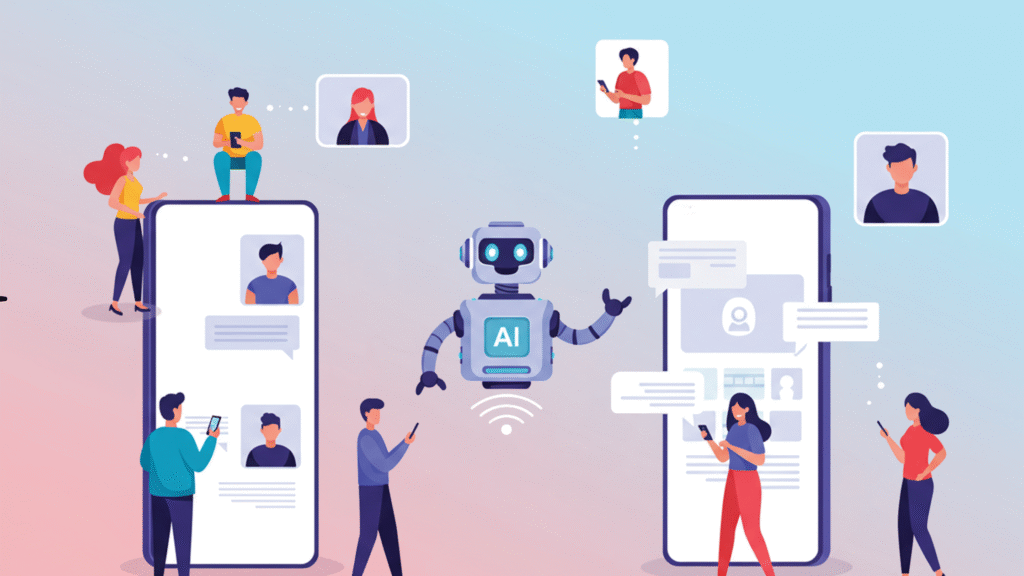
Search is no longer just about keywords. It’s about conversations. As tools like ChatGPT, Gemini, and Copilot change how users seek information, businesses see that visibility in these AI-driven search engines is now as essential as ranking on Google.
People are no longer typing “best pizza near me” into a search bar. They’re asking, “Where’s the best pizza place near me that’s open late?” AI models respond instantly. They pull context from web data, reviews, and structured content.
This new era of discovery means your brand must change its marketing strategy to speak the language of AI. The question every marketer is now asking is simple yet crucial: how to appear in ChatGPT results and similar conversational searches.
Let’s explore what it takes to make your business visible, credible, and discoverable in this AI-powered landscape.
Understanding AI Search: From Keywords to Conversations
Traditional search engines like Google index pages and rank them by relevance. AI search, however, goes further. It interprets context, meaning, and user intent.
Instead of just displaying links, conversational engines like ChatGPT summarize and synthesize information to give human-like answers. This means they rely heavily on well-structured, authoritative, and clearly written content that’s easy for AI to understand.
How AI Engines Gather Information
AI engines collect information from three main sources:
Trained knowledge: Data from large text collections used to train language models.
Real-time browsing: Live web results brought in through connected browsing tools.
Structured data: Schema markup, metadata, and FAQs that explain your page’s meaning.
When these systems pull answers, they favor sites that demonstrate expertise, provide a clear structure, and use natural language. These are the same principles behind modern SEO.
Why AI Search Optimization Matters Now?
With more users turning to ChatGPT, Gemini, and Perplexity instead of traditional browsers, brands that don’t optimize for AI search risk becoming invisible.
AI assistants are replacing a list of links with one authoritative answer, and you want that answer to include your brand.
Here’s why optimizing for AI search is important:
Changing search behavior: People are speaking to AI tools conversationally, not typing short phrases.
Deeper trust signals: AI prefers credible sources with a consistent tone, references, and facts.
Evolving algorithms: Google is integrating AI-powered overviews, changing what visibility means.
Early advantage: Few competitors have yet optimized for conversational engines, giving you a head start.
Your content must not only rank. It must resonate.
From SEO to AEO: The Shift to “Answer Engine Optimization”
If SEO were about optimizing for search engines, AEO (Answer Engine Optimization) is about optimizing for AI engines that provide complete answers.
The Core Difference
Traditional SEO AI Search (AEO)
Targets keywords, Targets questions, and conversations
Focus on backlinks. Focus on semantic clarity
Aims for ranking Aims for inclusion in AI answers
Optimizes for clicks. Optimizes for context and accuracy
In AEO, you’re not just chasing visibility. You’re becoming quotable.
How to Structure Content for AI Search?
AI thrives on structure, clarity, and meaning. The simpler your content, the easier it is for models like ChatGPT to interpret and reference it.
Key Optimization Practices
Use natural headings: Frame sections around real questions. Example: “What is conversational SEO?” or “How can businesses show up in ChatGPT results?”
Keep paragraphs short: Aim for 2 to 3 lines to maintain readability.
Include clear definitions: Start sections with concise explanations before diving into details.
Add bullet points: This helps AI extract quick facts and context.
Use schema markup: Define your business type, services, FAQs, and local presence.
When AI crawls your site, this structure allows it to identify your authority and match your answers with user intent.
Humanized Writing Wins
AI tools are designed to simulate human conversation, so they reward content that feels human. This means tone, rhythm, and readability matter just as much as technical accuracy.
What “Humanized” Content Looks Like?
Uses a conversational tone (“you,” “your business,” “let’s explore”)
- Explains complex ideas simply
- Includes emotion, storytelling, and examples
- Avoids keyword repetition or robotic phrasing
- Displays expertise and personality
- Your writing should feel like guidance, not a sales pitch.
How to Create Content AI Engines Understand?
- Focus on Questions, Not Keywords
Instead of optimizing for “AI search optimization,” create content that answers these questions:
“How can businesses get discovered in AI search?”
“Why is conversational SEO important?”
“What is the difference between ChatGPT results and Google search?”
- Strengthen E-E-A-T
Google’s Experience, Expertise, Authoritativeness, and Trustworthiness framework also helps with AI visibility. Include:
Author names and credentials
Case studies or results
Outbound links to credible sources
- Simplify Complex Information
AI systems look for clarity. Avoid jargon and overly long explanations; plain English always works best.
- Update Regularly
AI prefers fresh, timely content. Updating your top blogs quarterly can boost visibility across both Google and AI search engines.
Technical SEO Still Matters
While AI search focuses on meaning, traditional SEO foundations remain necessary. Think of it as optimizing for both humans and machines.
Checklist for Technical Readiness:
- Fast website loading speed
- Mobile-first design
- Secure HTTPS connection
- XML sitemaps for indexing
- Internal linking between related pages
- Structured schema data
A solid technical base helps AI access and interpret your content easily.
Building Topical Authority for AI Discovery
To show up in conversational answers, your brand must demonstrate a deep understanding of its niche. One isolated blog post isn’t enough. AI engines look for consistent coverage across related topics.
Steps to Build Authority
Create content clusters: Link blogs and service pages under one theme (e.g., “AI marketing,” “local SEO,” “PPC strategy”).
Answer subtopics: Cover every angle, FAQs, how-tos, guides, and trends.
Link internally: Help AI follow the context path across your pages.
Cite credible references: Data-driven content signals trust.
Over time, this approach builds your brand’s credibility in AI’s eyes, making your site more likely to appear in summaries and recommendations.
The Role of an AI Marketing Agency in Modern SEO
An AI Marketing Agency doesn’t just run ads or write blogs. It combines human creativity with machine intelligence to predict, adapt, and optimize content performance across every platform.
Agencies like Digital Drew SEM use AI analytics tools to:
- Identify emerging keyword trends across human and AI search.
- Generate audience insights that fuel personalized campaigns.
- Automate repetitive marketing tasks for efficiency.
- Enhance paid ads with predictive targeting and dynamic creatives.
By integrating AI into your overall marketing strategy, you create an ecosystem that’s intelligent, responsive, and designed for the next generation of digital discovery.
Optimizing for Conversational Queries
Users ask AI engines questions in full sentences, so your website should reflect that natural rhythm.
Examples of conversational optimization:
Instead of: “AI SEO agency New York”
Use: “Who is the best AI marketing agency in New York for small businesses?”
Instead of: “ChatGPT SEO tips”
Use: “How do I optimize my website to show up in ChatGPT results?”
This phrasing matches how users interact with conversational AI.
AI Search Meets Local SEO
Local businesses can gain a lot from AI search if they optimize correctly.
AI systems often prefer answers that are specific to the region. When users ask, “Where can I find a marketing agency near me?” or “Who offers PPC in Manhattan?”, AI looks at schema, reviews, and local citations.
Local Optimization Steps:
- Keep Google Business Profile listings updated.
- Add NAP (Name, Address, Phone) data to every page.
- Use local keywords naturally.
- Publish location-based service pages.
- Collect authentic client reviews.
For example, Digital Drew SEM’s local SEO services for NYC-based companies ensure your business appears in both map results and conversational answers.
The Future of AI Search: Personalized Discovery
AI search isn’t static; it’s adaptive. Soon, conversational engines will personalize answers based on user profiles, history, and preferences.
This means businesses must build trust and consistency across all channels, websites, ads, and social media to help AI understand and recommend them accurately.
What This Future Looks Like:
- Personalized results for each user
- Predictive recommendations before a query is finished
- Cross-platform discovery through chatbots and voice assistants
- Deep integration with eCommerce and local discovery tools
- Brands that begin optimizing for AI discovery today will lead tomorrow’s conversation.
Integrating AI Optimization into Your Marketing Strategy
Your SEO shouldn’t exist in isolation. AI search optimization must blend seamlessly with your overall marketing efforts.
Here’s how to integrate it effectively:
- Audit your existing SEO and identify content gaps.
- Create AI-friendly blog content with natural question-based structures.
- Use AI analytics tools to predict future search trends.
- Align PPC campaigns with the same messaging found in organic results.
- Monitor visibility by testing your content in ChatGPT and other engines.
When AI search, social media, and paid ads all work together, your brand presence becomes cohesive and much more discoverable.
Common Mistakes Businesses Make
Even experienced marketers can stumble when adjusting to AI search. Avoid these mistakes:
- Writing for algorithms instead of people
- Neglecting schema markup or structured data
- Overusing keywords unnaturally
- Ignoring page speed and mobile design
- Skipping factual accuracy or using outdated claims
AI systems can detect gaps in credibility. Consistency and transparency are vital for long-term discoverability.
Measuring AI Search Success
While there’s no official tool to rank on ChatGPT, you can monitor progress using these related metrics:
Referral traffic from AI-integrated browsers
Engagement metrics like time on page and bounce rate
Increase in branded searches after AI mentions
Conversions from informational content
You can also test visibility by directly asking ChatGPT industry-related questions and see if your business or pages appear. Use this as a baseline to improve.
Final Thoughts: Prepare for the Next Search Frontier
As AI search changes digital visibility, the key to staying relevant is adaptation. Understanding how to show up in ChatGPT results isn’t just about mastering a new algorithm. It’s about rethinking how your brand communicates.
A strong marketing strategy built on clarity, structure, and authenticity will help your business thrive across both search engines and conversational platforms. The shift from SEO to AI discovery is not a threat. It’s an opportunity to stand out as a trusted, human voice in an automated world.
If you’re ready to position your brand for this future, Digital Drew SEM can help. As a forward-thinking AI Marketing Agency, we blend intelligent automation with creative storytelling to help businesses rise above the noise, capture conversational visibility, and grow their reach in the AI-powered era of search.
In this new landscape, success belongs to brands that think smarter, speak clearly, and stay authentic. The future of search is here, so ensure your business is part of the conversation.

Drew Blumenthal is the founder and CEO of Digital Drew SEM, a results-driven, performance-focused digital marketing agency based in New York. With deep expertise in Google Ads, Meta advertising, SEO, website development, and social media management, Drew combines creative strategy with analytical precision to deliver measurable growth. He frequently shares insights on performance marketing, digital trends, and scalable strategies for business growth.